I have a new hobby.
Or is it an outlet?
I'm not sure, but it's awesome, and my life experience now officially includes the Polly Pocket. And I'm now that person studiously scrolling shuffle videos as the algorithm claims my nearly undivided attention for half-hour segments at a time.
But, it's doing something.
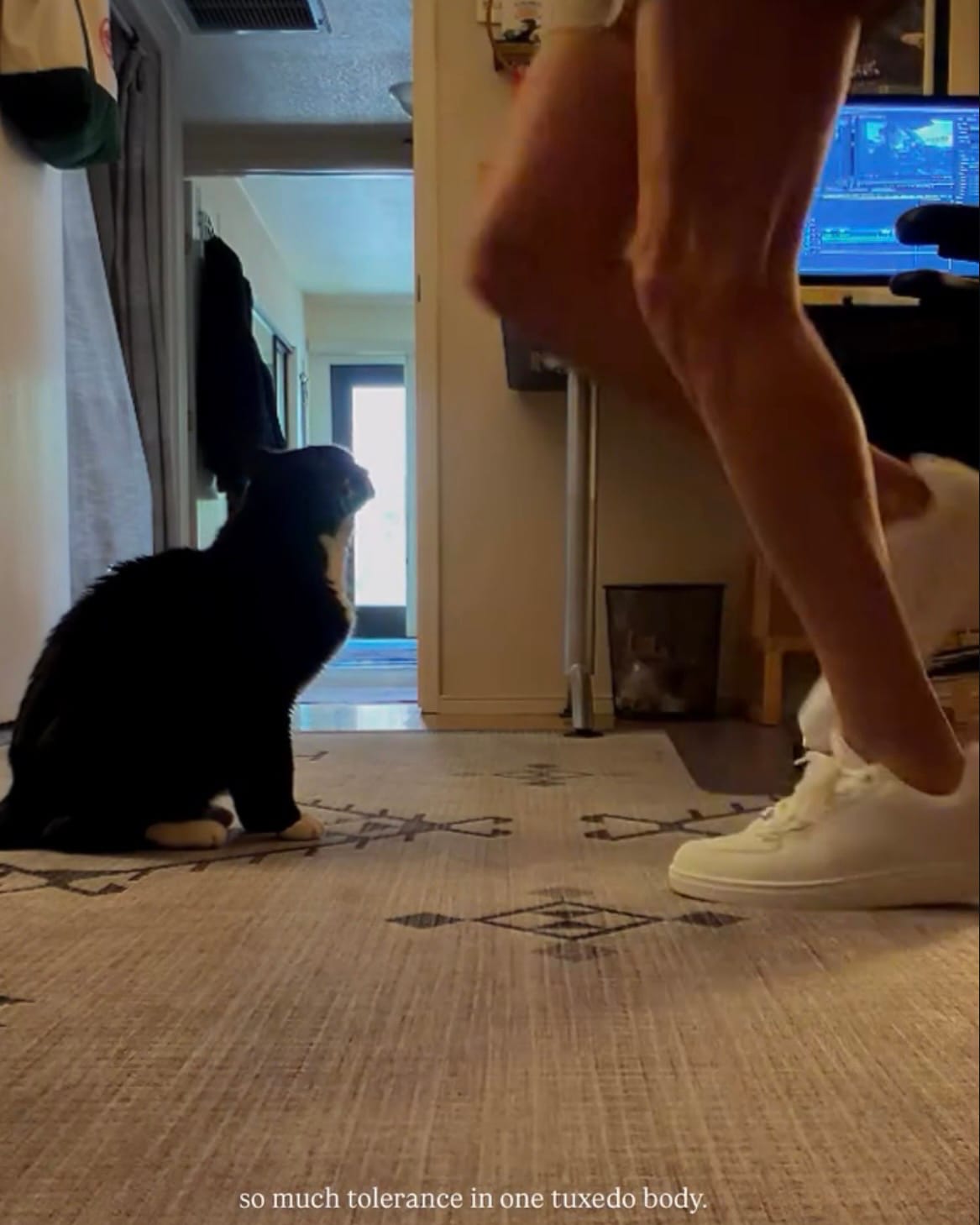
And given the fact that the outdoor realm reached the 20th level of hell last month, it's nice to have a physical outlet where hydration is easily available, air conditioning exists, and nobody needs anything from me. Even Louie, whose tolerance for the human in the house has risen to further epic proportions, often adjacent to shuffling areas (i.e. the office rug) and waiting for dinner with a saint's patience.
So, I shuffle dance now. Badly, at times. Enthusiastically, always.
There's something about having to think about where my feet are going that temporarily shuts off the part of my brain perpetually asking questions.
Which is useful, because lately there are a lot of them..
A few weeks ago, I hopped along on a weekend trip to South Florida to film some youngsters who are part of the advisory council for my friend and colleague's youth education initiative, LEAP.
There were shark dives.
There was kayaking.
And there was the Loggerhead Marinelife Center.
The center treats sea turtles who find themselves—or rather, their flippers, mouths and other body parts—casualties of fishing gear, along with juvenile turtles suffering from fibropapillomatosis, a disease caused by a herpesvirus that produces lesions and tumors and whose severity has been associated with environmental stressors.
Anyhoo.
The visit was a mixed bag. And some of what we encountered prompted conversation on the van ride back to the Airbnb.
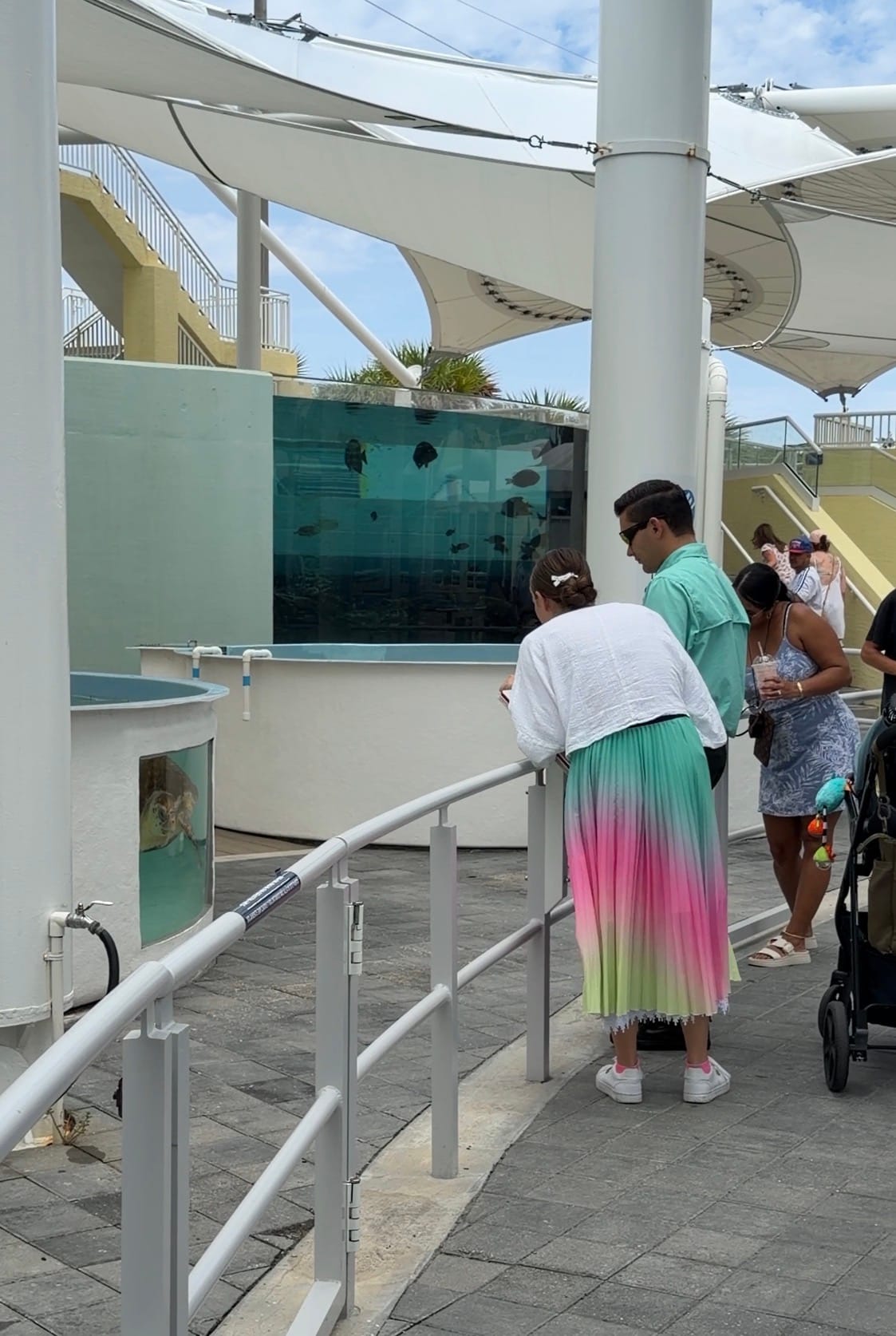
A few feet from the turtles being rehabilitated was an aquarium, with numerous fish and two sharks circling the tank.
"Hey, so, where'd they all come from?" I asked a staff person, gesturing toward the tank.
"Oh, those are our ambassadors."
"Ah, so they're in there...all the time?"
"Yeah."
"Where did they come from?"
"Hm, I'm not sure if we bought them or - someone else might know, one of the keepers."
A familiar little something started bubbling in my brain.
The center's design creates an oval-shaped adventure, subtly directing visitors through one last indoor exhibit before passing through the gift shop on the way to the final exit. Jellyfish floated in a cylindrical aquarium in the center of the room but it was an animated screen projection onto the wall that seemed to ironically (or was it?) keep many children's attention over the living exhibits.
I looked up and noticed a wall aquarium with lionfish. The information plaques above them were..something.
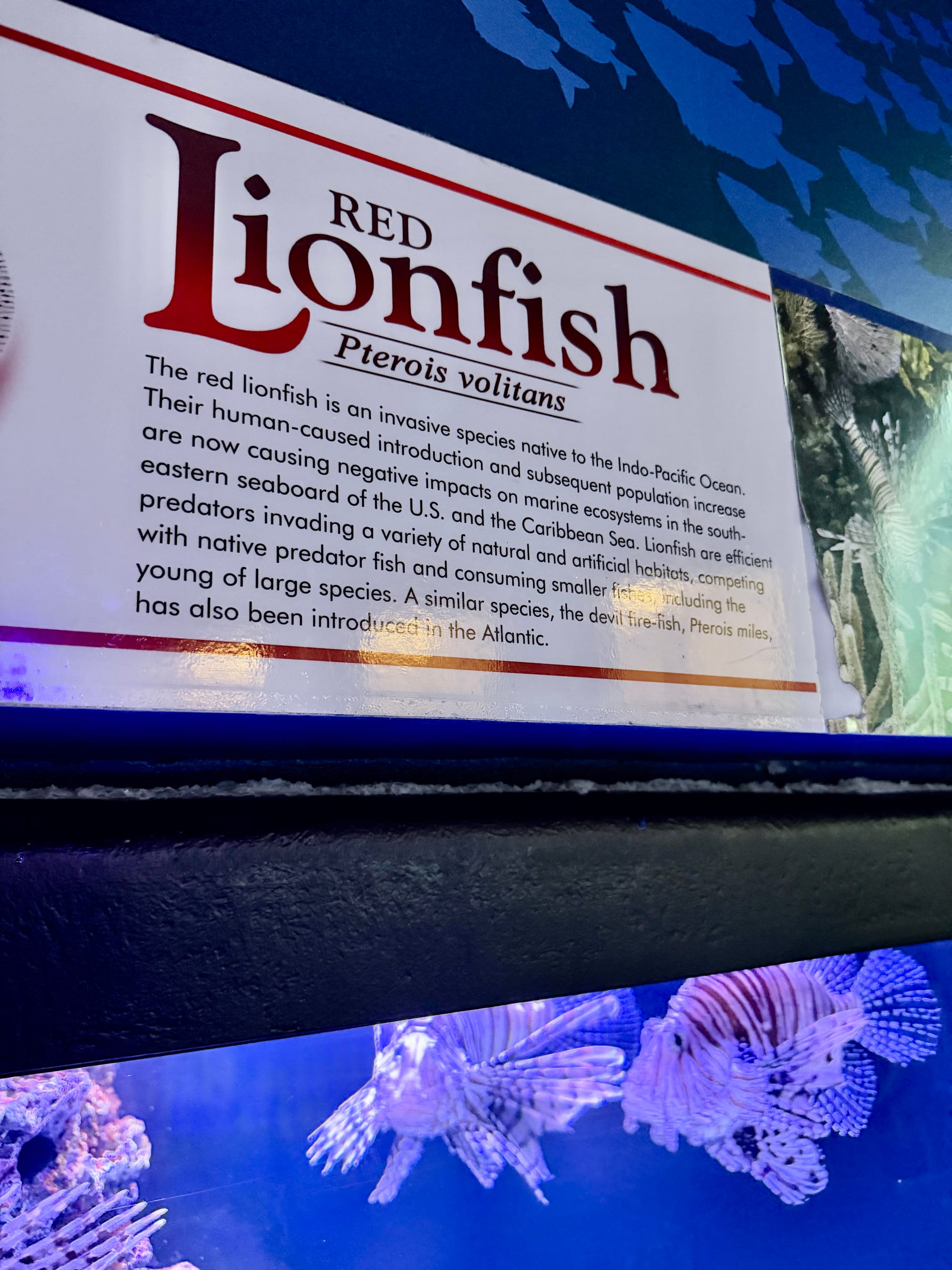
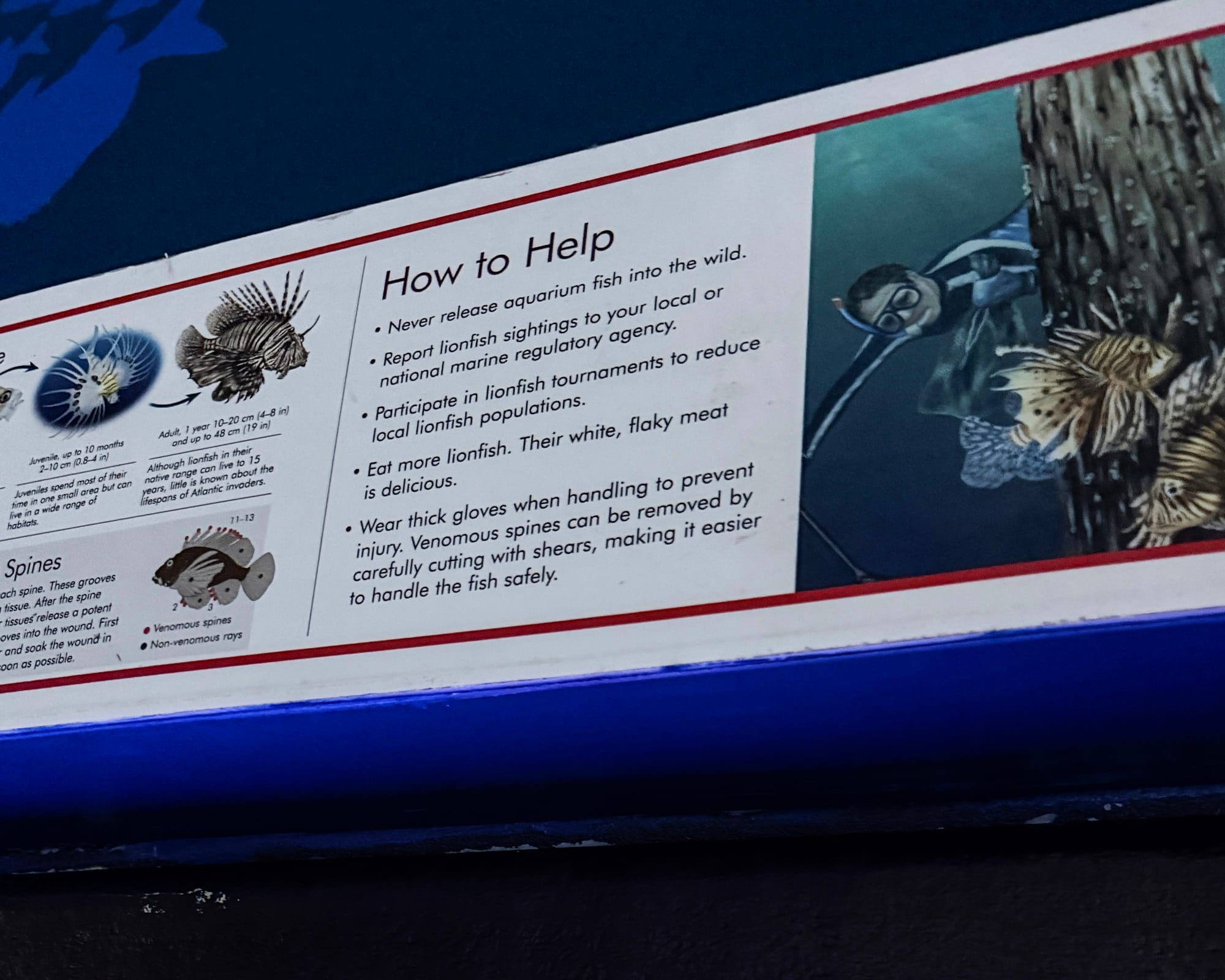
Here were living animals swimming inches below instructions for how we might better eliminate them.
The bubble in my brain popped.
Make that make sense.
We talk about human-caused invasive species and then reach immediately for violent language about how to eliminate them. We care about sea turtles while keeping other marine animals in confined aquariums to teach people to care about the ocean.
Of course, contradiction is everywhere. It's easy to say, "It's complicated" because, usually it is.
And nuance is important. I believe that deeply. Having a stance matters, AND so does keeping some percentage of your brain open to the possibility that somebody else knows something you don't.
But when does nuance stop illuminating a path forward and start giving us permission not to move?
And maybe most importantly:
Is awareness enough, or does awareness create responsibility?
These aren't only animal questions.
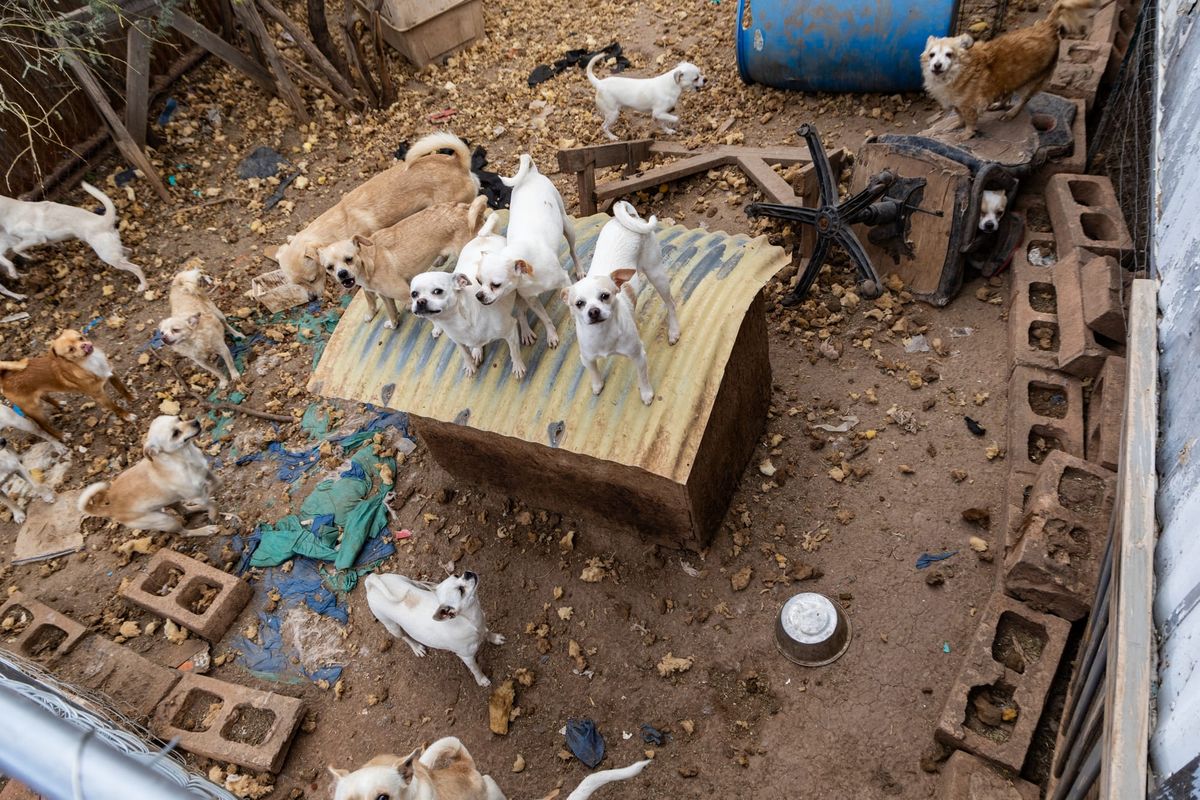
I've been filming animal hoarding investigations for most of this year. I've spent time around people living outside. I've been researching wolves and the conflicts that follow their return to landscapes humans have spent generations rearranging around ourselves.
Different worlds. Same reflexes.
People become nuisances.
Animals become "it."
Problems become too complicated.
And the same limiting questions get put on repeat:
"Why don't they just do better?"
"Why don't they make different choices?"
Because when something isn't convenient—when it doesn't line up neatly with what we consider tolerable, or when it asks more of us than our daily cycle of to-do lists seems capable of holding—it's remarkably easy to push the uncomfortable thing behind a curtain.
Language helps us do that. And language is paramount. And it gets twisted so easily.
"It."
"Invasive."
"Management."
Even rescue can become a tidy word for something that is anything but tidy.
Words can create distance from what—or who—is actually in front of us. But once you've really seen something, you can't unknow it.
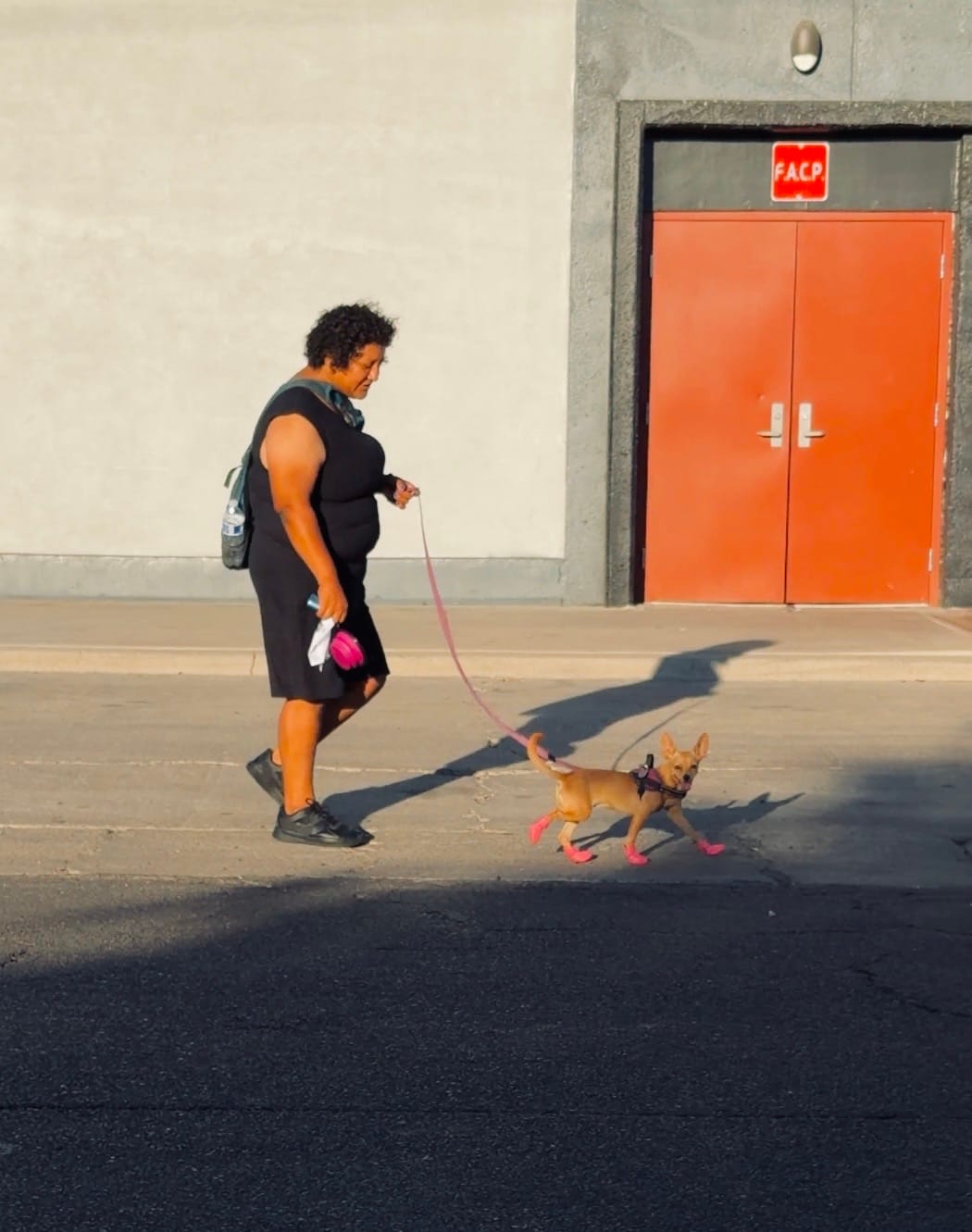
Inside The ARK. In Phoenix alleyways. In slaughterhouses and factory farms. In research about wolves and conflict. In front of a sea turtle rehabilitation tank while another animal circles an enclosure nearby.
Seeing doesn't necessarily hand you an answer. More often, it leaves you figuring out what the hell to do with everything you've taken in.
My lead investigator for The ARK and I share an affinity for gallows humor. I think it's part of how some of us are able to exist in these relatively unseen worlds without bringing every terrible thing home into every crevice of our personal lives. (I'm still crafting that balance recipe.)
We find our ways to come up for air.
Sometimes it's a terrible joke.
Lately it's learning to shuffle dance in my living room.
And boy, have I needed that.
Because the actual reality of no longer reaching for familiar "comforts" — let's just say, it's not listed on the memes of inspirational quotes.
It's long hours spent looking at a computer, half staring at and half organizing gigabytes of footage, wondering if what you're getting is good enough. Wondering if you're asking the right questions. Wondering if this thing you're building will eventually resemble the thing you can see somewhere in your head (saving imposter syndrome flare ups for next post).
It's edit breaks and paid work and trying to remember to move your body.
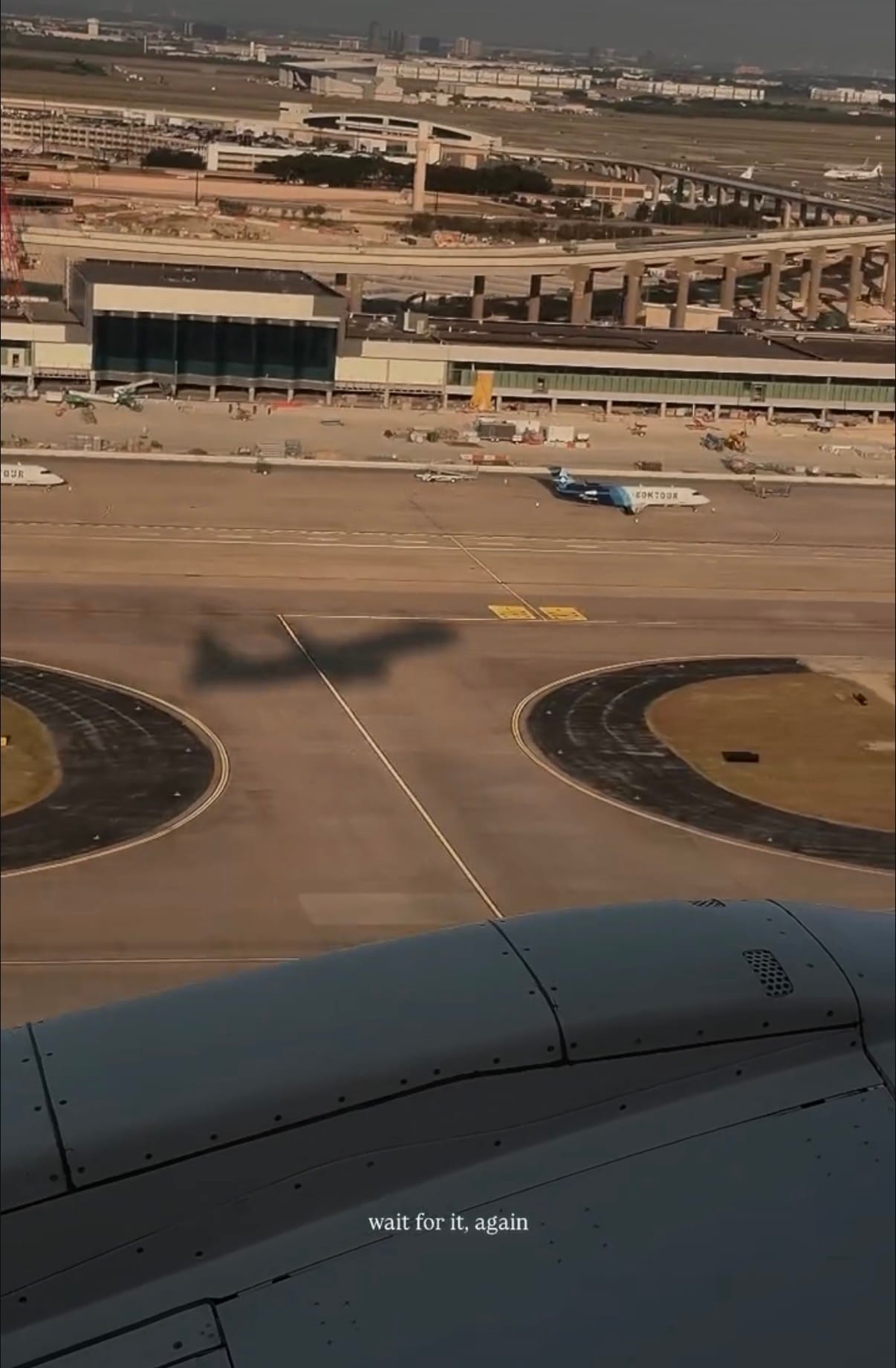
It's letting the tears flow in the exit row of a plane as storm clouds poetically pass by, thinking about all the things — certain memories, choices you've made, the animals you've met and walked away from for the "bigger picture" argument.
Maybe that's where repeat Running Mans at 120bpm come in.
It's like a jet propulsion out of the sads.
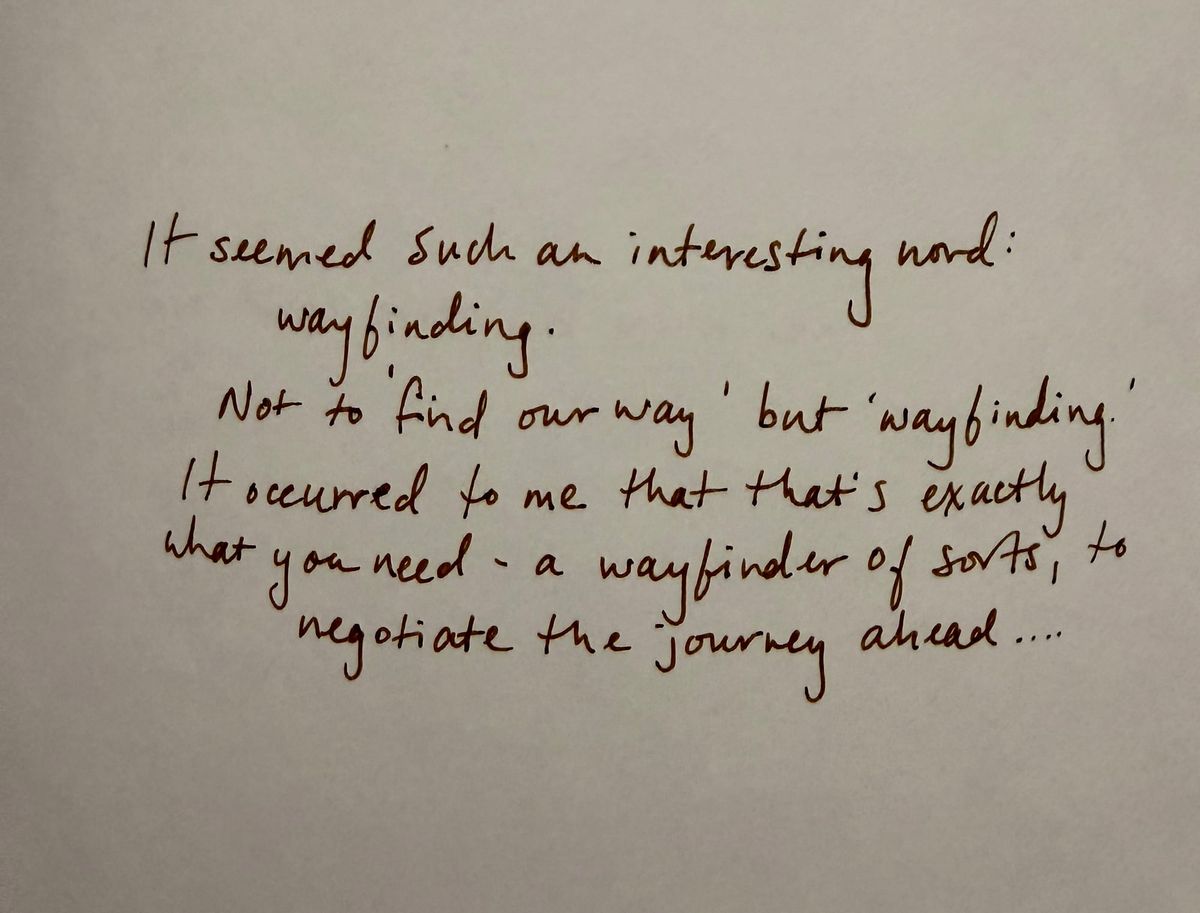
Because somehow, in the middle of all of that, something has been getting clearer.
The last night in Florida, I was lying there with my earbuds in, listening to Insight Timer, when I realized that all these seemingly disparate places I've been drawn toward are connected.
And yes, they're different stories. Different systems. Different stakes.
But beneath them, I keep finding myself interested in the same place: that uncomfortable space between what we say we believe and what we do once those beliefs ask something of us.
Answers matter, but the right questions have a way of staying with us. Especially the ones that become harder to ignore once we've seen what's underneath.
For me, one keeps rising above the others:
What do we do, after we know?
This site and writing are free for the world. If you'd like to support my work, you can subscribe (free or paid), share or comment and/or explore fine art prints and watercolor paintings from the shop. Your support helps sustain my long term projects and creates more time to write, paint and share. Thank you for being here. ♥️
Member comments